

Regular dialysis appointments already require time and planning. Transportation should feel manageable, not like another uncertainty to work through.
The right ride depends on how the rider needs to travel. Some people can remain comfortably seated in a wheelchair, while others need to travel reclined on a stretcher. Bariatric equipment or a longer travel distance may also affect the setup.
HealthLift provides non-emergency medical transportation (NEMT) throughout Metro Phoenix and Tucson for riders with different mobility, positioning, equipment, and travel needs.
Quick Answer
The right dialysis transportation depends on four main factors: mobility, the position the rider needs during travel, mobility equipment, and trip distance. HealthLift offers wheelchair, stretcher or gurney, bariatric, and long-distance transportation throughout Metro Phoenix and Tucson. Sharing these needs when booking helps match the rider with an appropriate transportation setup.
Why the Right Ride Matters for Dialysis
Many people receiving in-center dialysis follow a regular treatment schedule, often several times each week. With that much travel built into the routine, dependable transportation can make treatment days easier to manage.
A national study of 115,982 dialysis patients found that 27% did not have private transportation.

Lack of private transportation was associated with more missed treatments and higher mortality. The findings highlight the importance of having reliable access to transportation for ongoing dialysis care.
Reliability is only part of the picture. The ride also needs to accommodate the rider’s positioning, mobility equipment, and travel needs. Choosing the appropriate setup before booking helps HealthLift prepare for those needs.
How to Choose the Right Dialysis Transportation
Does the Rider Need to Remain in a Wheelchair?
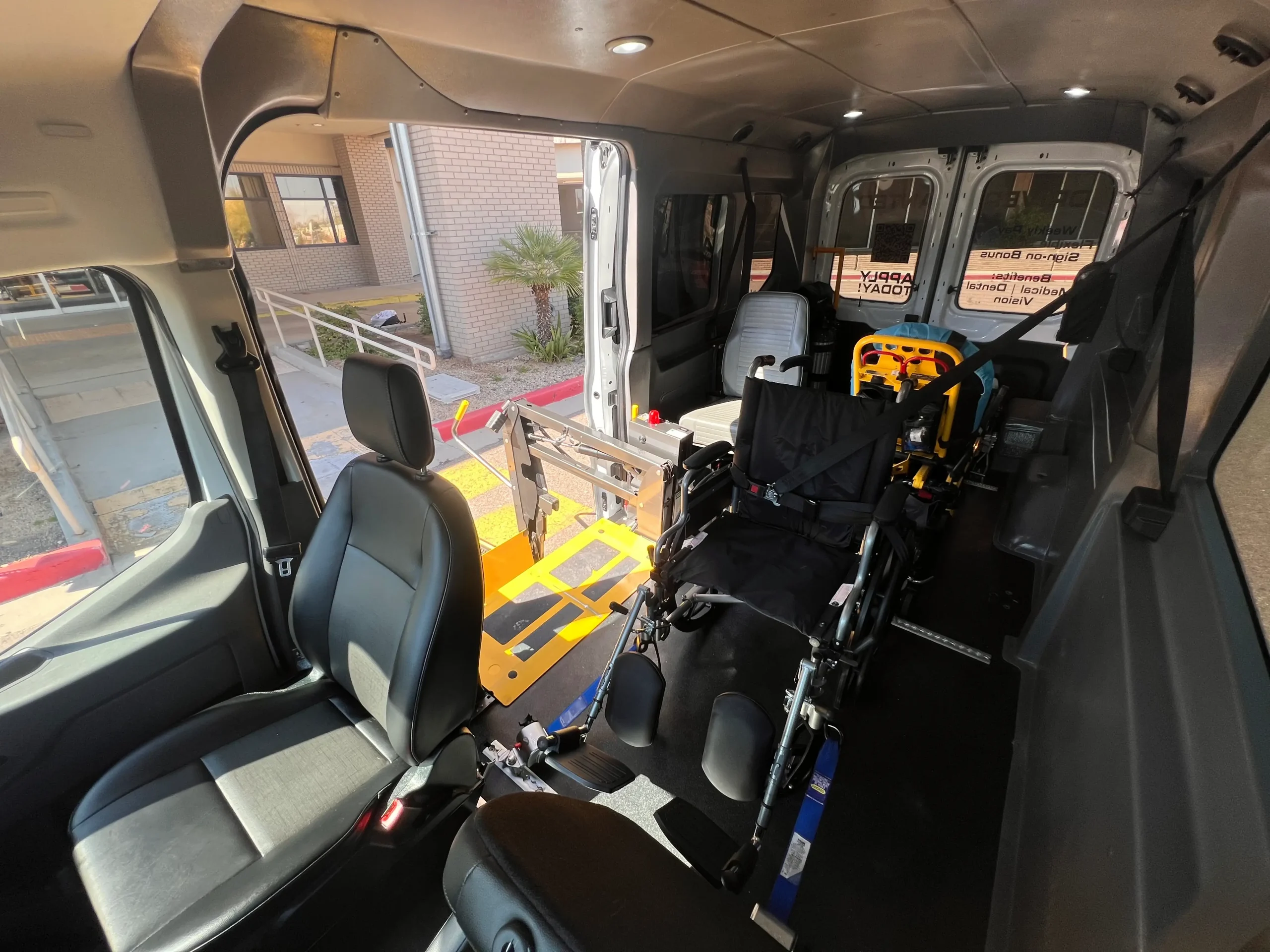
Wheelchair transportation may be the appropriate option when the rider needs to remain seated in their wheelchair during the trip. When booking, share whether the rider uses a standard, oversized, bariatric, or electric wheelchair so HealthLift can prepare the appropriate vehicle and equipment.
Does the Rider Need to Travel Reclined?
Stretcher or gurney transportation may be appropriate when the rider needs to remain reclined rather than travel seated. HealthLift offers standard and bariatric stretcher transportation for different positioning and equipment needs.
Is Additional Space or Bariatric Equipment Needed?
Bariatric transportation may be appropriate when the rider needs additional room or higher-capacity equipment. HealthLift can accommodate bariatric wheelchairs and stretchers, including wheelchairs up to 34 inches wide. Sharing equipment dimensions ahead of time helps the team prepare for the ride.
Is the Dialysis Center Farther From Home?
Distance can affect the transportation plan too. If the dialysis center is outside the local area, elsewhere in Arizona, or across state lines, HealthLift offers long-distance transportation while still accommodating the rider’s wheelchair or stretcher needs.
What HealthLift Can Accommodate for a Dialysis Ride
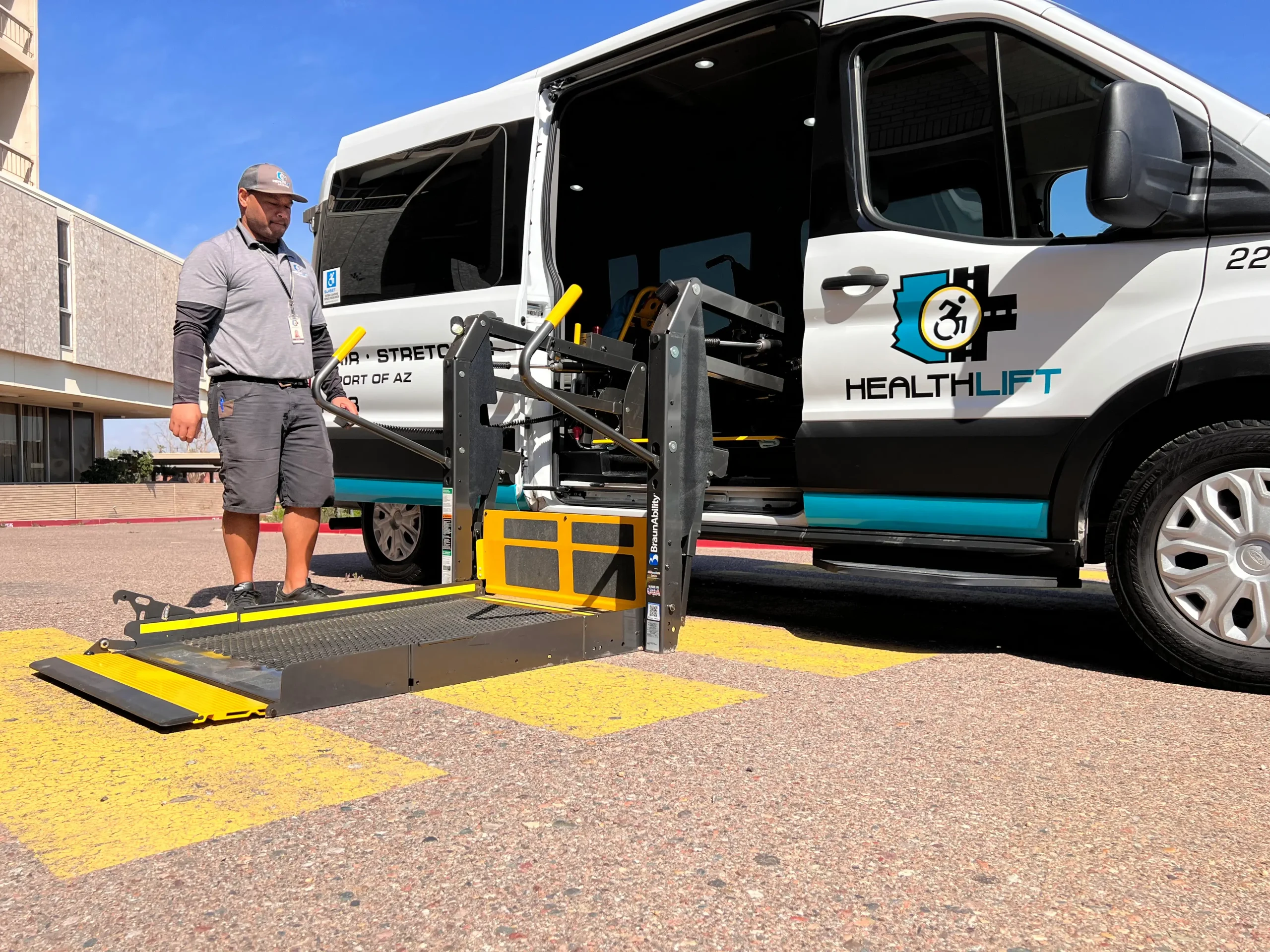
Transportation needs can vary from one rider to another, even when the destination is the same dialysis center. HealthLift’s fleet supports standard, oversized, bariatric, and electric wheelchairs, as well as mobility scooters. Heavy-duty lifts help accommodate different wheelchair setups.
For riders who need to remain reclined, standard and bariatric stretcher transportation is also available. HealthLift can accommodate wheelchairs up to 34 inches wide and provides long-distance wheelchair and stretcher transportation across Arizona and beyond state lines.
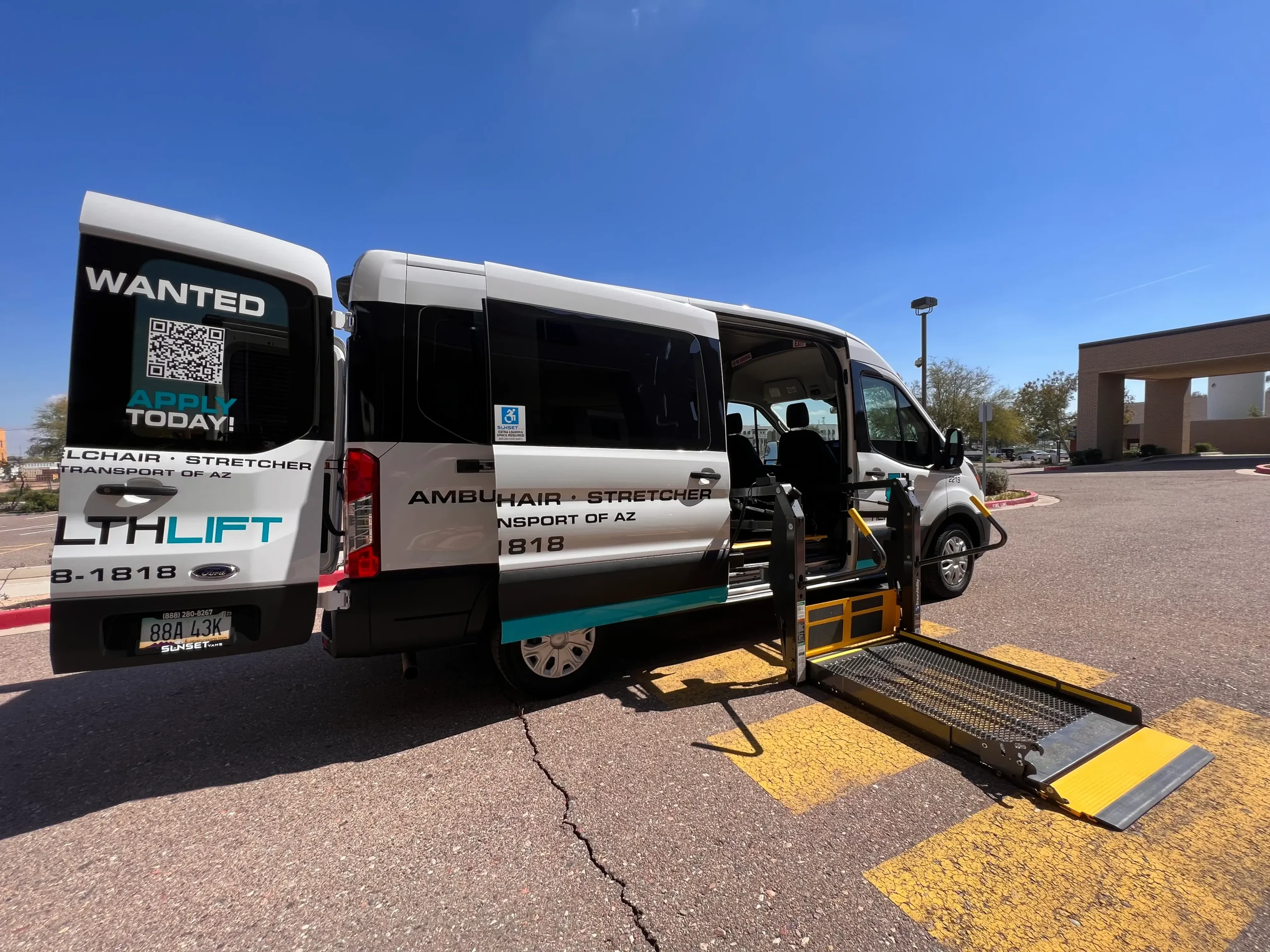
Oxygen may also be available when needed, with administration handled by a caregiver or medical professional.
HealthLift screens its drivers through background checks and drug testing and requires training or certification in CPR, defensive driving, PASS, and hospice sensitivity.
What to Tell HealthLift Before Booking a Dialysis Ride
Whether you’re arranging transportation for yourself, a family member, or a patient, you don’t need to know every transportation detail before calling. Sharing a few key details helps HealthLift understand what the rider needs and prepare the appropriate vehicle and equipment.
- Mobility and position: Explain whether the rider can transfer into a seat, needs to remain in a wheelchair, or needs to travel reclined.
- Mobility equipment: Share whether the rider uses a manual wheelchair, electric wheelchair, mobility scooter, bariatric wheelchair, or other equipment. Include dimensions when relevant.
- Pickup and destination: Provide the pickup location, dialysis center, appointment or check-in time, and return-trip plans.
- Access considerations: Mention stairs, gates, narrow entrances, facility pickup instructions, or other details that may affect boarding or drop-off.
- Travel distance: Let HealthLift know whether the trip stays within Metro Phoenix or Tucson or extends farther across Arizona or out of state.
- Additional needs: Share whether a caregiver will travel with the rider or whether oxygen will be needed during transportation.
Managing Recurring Dialysis Rides
Once the transportation setup is established, a HealthLift account can make recurring dialysis trips easier to manage. Patients and families can schedule multiple rides, review upcoming trips, track vehicles, and make payments online.
If you need dialysis transportation regularly, HealthLift’s guide to recurring dialysis transportation explains ongoing ride scheduling in more detail.
Coordinating Transportation for Multiple Patients?
Dialysis centers, case managers, and care facilities can use a HealthLift Corporate Account to coordinate transportation for multiple patients in one place. Account tools include ride scheduling, vehicle tracking, and online payment management.
Find a Dialysis Ride That Fits the Rider’s Needs
Choosing dialysis transportation can feel simpler once you know what information matters. Start with how the rider needs to travel, what mobility equipment will come along, and how far the trip will go.
HealthLift can use those details to help arrange an appropriate ride throughout Metro Phoenix and Tucson.
Create a HealthLift account to manage recurring rides or request a Free Quote for an upcoming trip.
FAQs About Dialysis Transportation
Do I need wheelchair or stretcher transportation for dialysis?
It depends on how the rider needs to travel. Wheelchair transportation may be appropriate when the rider can remain seated in their wheelchair. Stretcher or gurney transportation may be appropriate when the rider needs to remain reclined. When you arrange the trip, HealthLift can discuss the rider’s mobility and positioning needs with you.
Can HealthLift transport an electric wheelchair or mobility scooter?
Yes. HealthLift can accommodate standard, oversized, bariatric, and electric wheelchairs, as well as mobility scooters. Share the equipment type and dimensions when arranging the ride.
What if I am not sure which ride type to request?
Share how the rider moves, the position they need during travel, any mobility equipment they use, and the trip distance. HealthLift can use that information to help determine an appropriate transportation setup.
Can dialysis transportation be scheduled in advance?
Yes. HealthLift account users can arrange multiple upcoming rides, manage trip details, track vehicles, and make online payments.
Is long-distance dialysis transportation available?
HealthLift provides long-distance wheelchair and stretcher transportation for qualifying trips across Arizona and beyond state lines.