

Quick Answer
After a severe traumatic brain injury, a person may no longer need emergency ambulance care but still have mobility, positioning, cognitive, or communication needs that make a standard car difficult to use. Non-Emergency Medical Transportation (NEMT) provides planned accessible rides for these non-emergency trips. HealthLift serves Metro Phoenix and Tucson with wheelchair, stretcher, bariatric, and long-distance options and plans each ride around the rider’s equipment, positioning, and trip details.
The trip home from the hospital is often only the beginning. The weeks that follow may include rehab, neurology visits, imaging, therapy, and follow-up appointments.
In a multicenter U.S. study of adults with moderate-to-severe traumatic brain injury (TBI), nearly 72% of participants with available follow-up data received inpatient or outpatient rehabilitation services during the first year after injury. For a person still dealing with mobility, positioning, cognitive, or communication changes, getting to that ongoing care can require more planning than a standard car ride.
Travel that once felt routine can take more effort after a severe brain injury. Getting into a vehicle, sitting through a long ride, following directions, or adjusting to an unfamiliar place can all become harder.
Why a TBI Patient May Need More Transportation Planning
A wheelchair or stretcher is only one part of the picture.
A person recovering from a severe TBI may need more time to board. They can also have trouble transferring into a standard vehicle or need to stay reclined for the trip.
Cognitive changes can matter just as much. Some people need extra time to process instructions. A schedule change or busy pickup area can also cause confusion. Share those details when booking, along with any communication needs or precautions.
Before pickup, the person arranging the trip should be ready to share practical details such as:
- Ability to remain seated for the full trip
- Type of wheelchair used, including standard, power, oversized, or bariatric
- Need for stretcher transportation
- Stairs or other access barriers at pickup or drop-off
- Oxygen requirements and who will administer it
- Plans for a family member, caregiver, or other companion to ride along
- Communication needs or extra time required to process instructions
- Other precautions that can affect boarding, positioning, or the trip itself
These details help us prepare the right vehicle and ride setup.
What Is Non-Emergency Medical Transportation?
Non-Emergency Medical Transportation or NEMT is a planned ride for people who need more accessibility or assistance than a standard car provides. It is for people who do not need emergency ambulance care.
After a severe brain injury, NEMT can support hospital discharge, rehab, therapy, specialist visits, imaging, or trips between care settings.
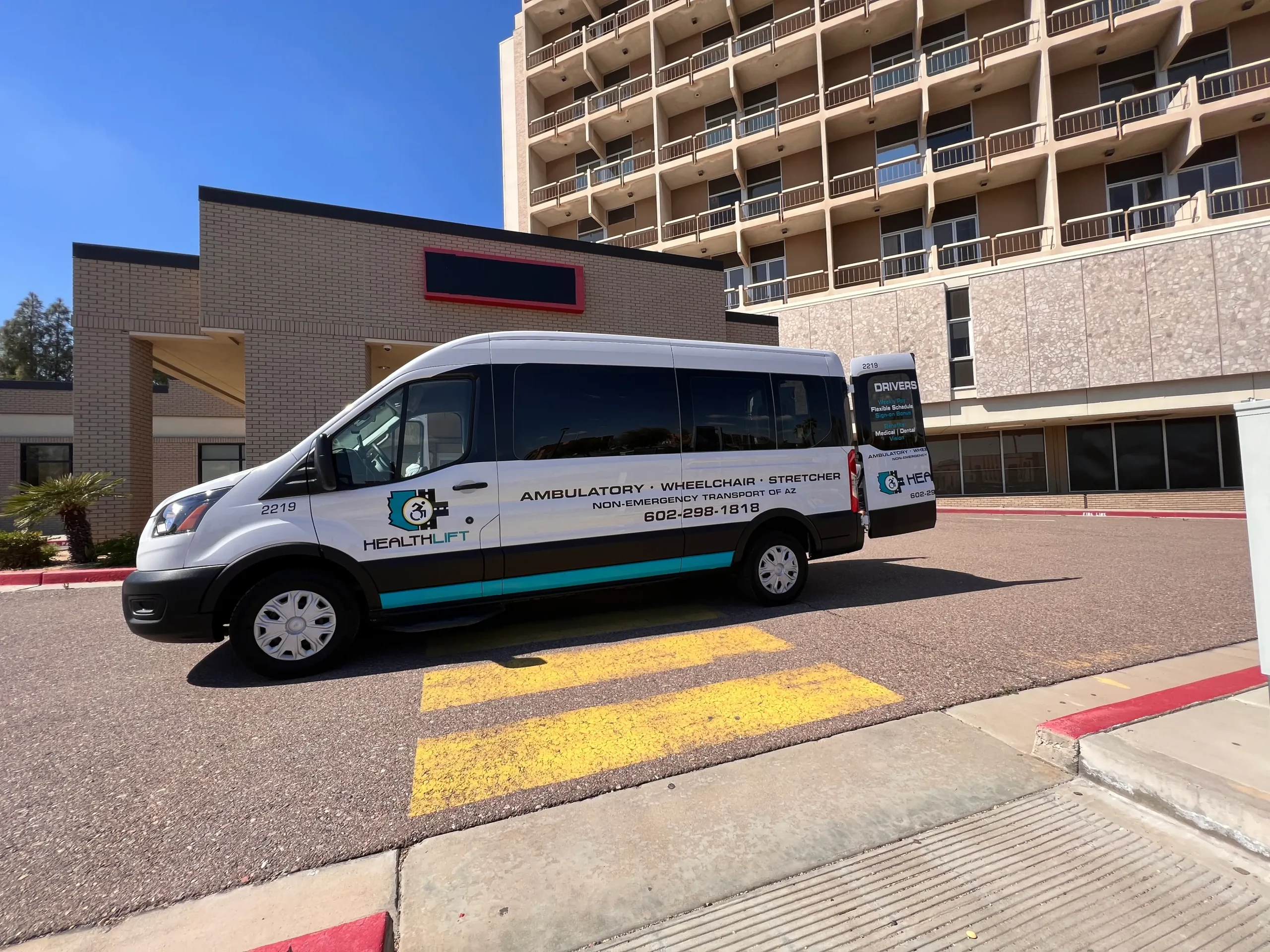
If someone has a medical emergency, call 911 instead of arranging an NEMT ride.
For a broader look at planned medical rides, read HealthLift’s guide to non-emergency transportation in Arizona.
Matching the Ride to the Person
At HealthLift, we arrange each trip around what the rider actually needs. That can mean staying in a wheelchair, traveling on a stretcher, using bariatric equipment, bringing a companion, or traveling farther for care.
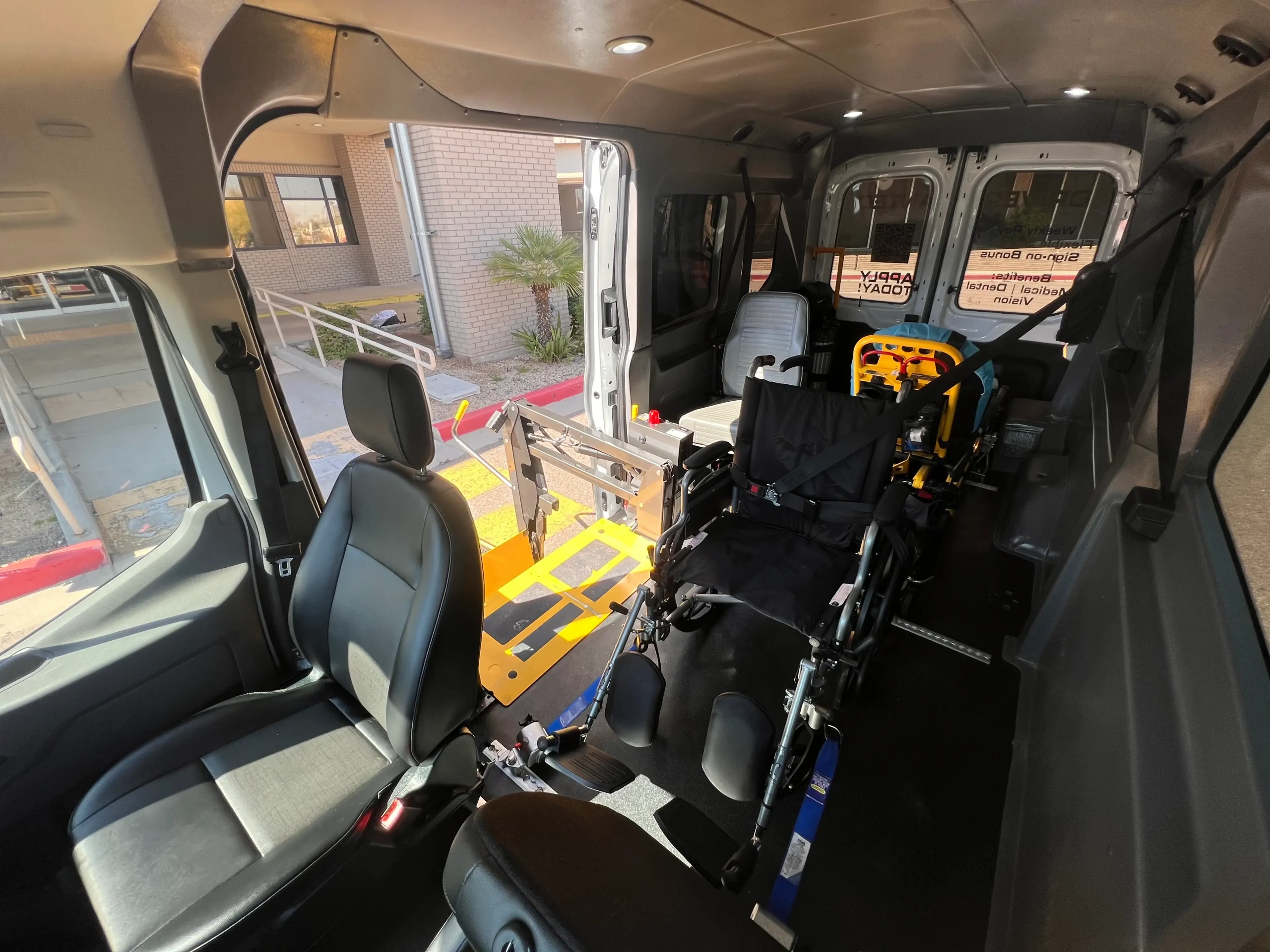
- For riders who use standard, oversized, bariatric, or electric wheelchairs, our Wheelchair Transportation supports accessible boarding with heavy-duty wheelchair lifts and lets the rider remain in their wheelchair during the trip.
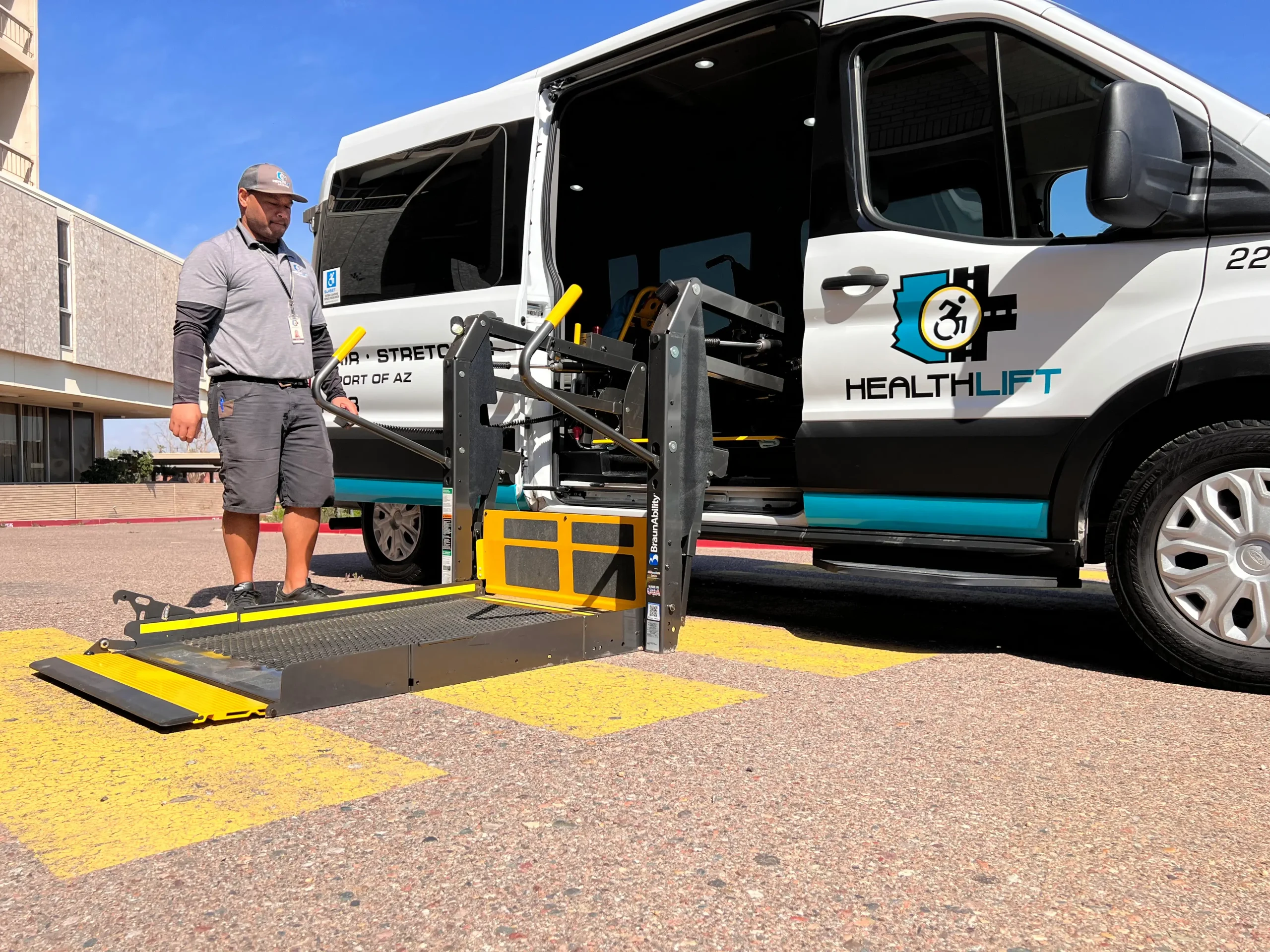
- When someone needs to remain reclined, Stretcher Transportation provides standard and bariatric stretcher options based on positioning and space needs.
- Bariatric Transportation can accommodate wheelchairs up to 34 inches wide, along with bariatric stretcher options.
- Long-Distance Transportation supports wheelchair, stretcher, and bariatric trips across Arizona or out of state for specialist visits, therapy, follow-up care, and other appointments.
HealthLift uses ADA-compliant vehicles with space for a companion. Drivers also complete specialized training, including CPR, Defensive Driving, Hospice Sensitivity, and Passenger Assistance, Safety and Sensitivity (PASS) certification.
Transportation After Hospital Discharge and During Rehabilitation
Hospital discharge adds details that do not usually apply to a routine appointment. Before arranging the ride, confirm the facility’s discharge window, designated pickup location, and whether a responsible adult must accompany or receive the patient.
Share those requirements when booking so HealthLift can plan the pickup around the facility’s instructions.
For more discharge-specific planning, see HealthLift’s hospital discharge transportation guide for Phoenix and Tucson.
Planning Rides in Phoenix and Tucson
HealthLift provides accessible transportation for medical patients throughout Metro Phoenix and Tucson. That includes rides to hospitals, rehabilitation facilities, therapy clinics, imaging centers, specialists, and other medical sites.
Depending on the care plan, TBI-related destinations may include:
- Barrow Neurological Institute in Phoenix
- Banner Rehabilitation Hospital Phoenix
- Banner Rehabilitation Hospital Tucson
- Encompass Health Rehabilitation Hospital of Northwest Tucson
The medical team determines the appropriate facility and level of care. We can then coordinate the ride to that destination.
For repeat visits, a HealthLift account can make scheduling easier. Users can book future rides, track rides, and view or edit reservations.
If you need a ride within 90 minutes, call our dispatch team directly at 602-298-1818 to check availability.
Arrange an Accessible Ride with HealthLift
After a severe brain injury, transportation shouldn’t add another complication to an already demanding schedule.
For a TBI patient who needs wheelchair, stretcher, bariatric, or long-distance transportation, HealthLift can coordinate the ride around the person’s mobility, positioning, equipment, and destination.
Since 2015, our management team has brought more than 75 years of combined NEMT experience to riders, families, and care teams across Arizona.
Sign up for a HealthLift account to book and manage scheduled rides online. If you need an estimate first, request a Free Quote. To arrange a ride by phone, call 602-298-1818 in Phoenix or 520-298-1818 in Tucson.
FAQs About Transportation After Severe TBI
Can a family member or companion ride along?
Yes. HealthLift vehicles have room for a companion when needed. Tell HealthLift who plans to ride along when arranging the trip.
Can HealthLift provide oxygen during the ride?
Oxygen is available in HealthLift vehicles, but a caregiver or nurse must administer it. Share oxygen requirements when booking so we can plan the trip accordingly.
What should I do if the ride is less than 90 minutes away?
Call 602-298-1818 directly to check availability for a ride needed within 90 minutes.
When should I call 911 instead of HealthLift?
HealthLift provides Non-Emergency Medical Transportation, not emergency medical care. Call 911 if the rider is experiencing a medical emergency or needs emergency ambulance care.